
Thyroid Medication Update: What You Should Know

Betty Chaffee/ January 23, 2026/ Medication Management, Medication safety/ 0 comments

Low thyroid (hypothyroidism) is a common problem among adults. It's most often caused by iodine deficiency in other parts of the world, but here in the US it's usually due to an autoimmune disorder (Hashimoto's disease). More often than not, a diagnosis of hypothyroidism will require lifelong treatment with a thyroid hormone replacement. Luckily, thyroid replacement therapy is relatively simple. Safe and effective oral medications are available and doctors are experienced in making sure the dose is just right.

If you have hypothyroidism, it's important for you to know that the FDA is taking a hard look at thyroid replacement meds. They're currently planning to take one of them off the market later this year. If you take a thyroid medication, their actions may affect you.

What is Thyroid Hormone?

image of thyroid glandThe thyroid gland sits at the base of the neck. It secretes two hormones that, together, we think of as "thyroid hormone".  One of the hormones (thyroxine, or T4) is slowly converted to the other (T3) by the liver. The conversion happens at a speed that typically keeps T4 and T3 in just the right balance. Together, these hormones regulate the body's metabolism, including heart rate, weight gain/loss, and heat production to keep your body functioning well.
When the thyroid gland stops producing enough hormone, people experience symptoms like weight gain, feeling cold more frequently, lack of energy, thinning hair and other problems. Diagnosis of hypothyroidism is typically based on the level of thyroid hormones in the blood. And the good news is that treatment is simple and effective.

Thyroid Hormone Replacement 

Thyroid replacement medications

Levothyroxine is the most widely-prescribed thyroid replacement medication. It's a synthetic form of T4, so is slowly converted in the body to T3. Getting to the right dose may take some time, and it may need occasional adjustment, but usually it resolves all the symptoms of hypothyroidism.

Some people find that levothyroxine alone doesn't resolve their symptoms. That can happen when T4 isn't converted to T3 quickly enough to provide the right balance. Liothyronine, a synthetic form of T3, may be added at that point. It's an active medication right when it hits the bloodstream so can have a more immediate effect on symptoms. When levothyroxine and liothyronine are combined, their doses can be adjusted individually to resolve symptoms without significant side effects.

The other thyroid replacement medication is known by several names --  Dessicated Thyroid Extract (DTE), Armour Thyroid, Porcine Thyroid, or Natural Thyroid. We'll call it DTE for simplicity. It's made from grinding up the thyroid glands of pigs or cows; that makes it a biologic rather than synthetic compound. DTE contains both T3 and T4, but in different amounts than the human thyroid. It was the very first thyroid replacement medication in the late 1800's, and was a huge step forward in treating hypothyroidism.  Its discovery provided welcome relief to people who needed it. And it's still used now..

Why is the FDA concerned about DTE?

DTE was already in use when the FDA was created in the early 1900's so was "grandfathered" in as a prescription drug. The FDA's drug approval process has evolved from evaluating safety only to now evaluating both safety and efficacy. And DTE has never been evaluated for either.

But why, now, is the FDA is suddenly taking action on this matter? It turns out that the action isn't really sudden at all. While it's clear that DTE is effective, FDA has been concerned about its potency, purity and safety for a long time. In recent years they've urged manufacturers of DTE to submit applications for approval. But thus far manufacturers have chosen not to submit those applications. So in August of 2025 FDA gave manufacturers a deadline to gain approval for their products. At the same time, the action gives patients and their healthcare providers time to transition to other treatments.

Though many people who take DTE do well on it, others who take it encounter problems. One is that the content of T4 and T3 can vary from one manufacturer to another, from one batch of the same product to another and even from pill to pill within the same batch. Over he years that has resulted in patients having recurrence of symptoms or adverse effects. Another issue is that because DTE is a biologic product, it may contain impurities when strict manufacturing processes aren't used. And finally, the higher amount of T3 puts patients at a higher risk of heart problems and other side effects.

The FDA is charged with ensuring safety, efficacy, and purity of medications. Apparently they've decided it's time to make manufacturers accountable for providing thyroid products that meet those standards.

What's the alternative to DTE?

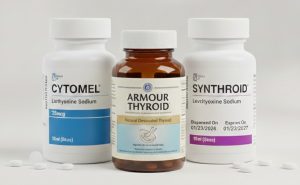
Bottle of Cytomel and SynthroidThe synthetic products we talked about earlier, levothyroxine (T4) and liothyronine (T3), are the safest and most effective thyroid replacement alternatives. They're approved, reliable, and have been used safely for many years.

Most people do well with T4 (levothyroxine) alone. Some may need additional T3 (liothyronine) to get the right balance for their bodies. If you're already taking these synthetic replacements, there'll be no changes for you. But If you're taking DTE, start talking with your pharmacist and doctor to come up with a plan. It's still possible that makers of DTE will submit applications for approval. If so, the FDA may determine that some DTE products are safe and reliable. But if not, rest assured that there are effective alternatives to keep you healthy. .

As always, send us your comments and questions in the space below. Or contact us at Better My Meds -- we love hearing from you!

Download printable version
Share this Post

About Betty Chaffee

Betty Chaffee, PharmD, is owner and sole proprietor of BetterMyMeds, a Medication Management service devoted to helping people get the maximum benefit from their medications.

Leave a Comment

Your email address will not be published. Required fields are marked *

*
*