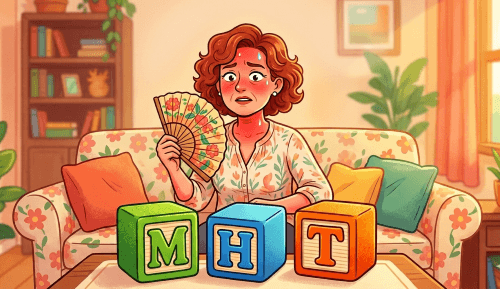

Menopausal Hormone Therapy — No Longer Off Limits

Betty Chaffee/ May 22, 2026/ Medication Management/ 0 comments

Until the early 2000's, hormones were used pretty routinely to treat women with uncomfortable menopausal symptoms. Then a study by the Women's Health Initiative changed everything. It seemed to show that the risks of hormone replacement far outweighed the benefit. So for the past two decades or so, doctors have discouraged the use of hormones. But a reanalysis of the research results found that some conclusions didn't apply to women of all ages. So late last year the caution light on hormone replacement was essentially changed from red to yellow.

Let's start at the beginning

When young girls enter puberty, hormones start changing their bodies. Estrogen, produced by the ovaries, is the major hormone affecting reproduction, but it has other roles, too. It keeps bones strong and improves cardiovascular health. It affects mood, too (for both good and bad). Overall, estrogen is a major factor in the health and well-being of women for much of their adult lives.

Estrogen levels begin to decline as women age, throwing off the balance between estrogen and progesterone (another hormone produced by the ovaries). This is perimenopause, which may last for months or years before actual menopause. Menopause is the point at which menstruation completely stops (on average, around age 52). From then on the ovaries will produce little, if any, estrogen. 

Menopausal symptoms

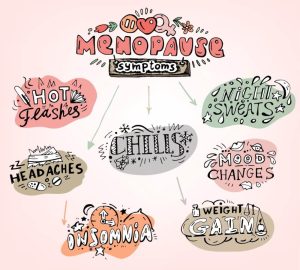
Graphic of menopause symptomsEven though all of this is natural and expected, it can still be uncomfortable. Many women get through this change without much trouble. But for others, the physical symptoms that go along with the loss of estrogen can be debilitating. Hot flashes, insomnia, night sweats, vaginal discomfort, low sex drive. There are psychological symptoms, too -- mood changes from anger, to depression and anxiety. Over the past two decades, these women have had few options for relief. That's what's changed since last fall -- there's effective treatment now for many women. It's "menopausal hormone therapy", or MHT.

Until recently, you may have heard the term "hormone replacement therapy", or HRT. MHT is the current term, but they mean the same thing. MHT provides estrogen that can significantly ease the severity of menopausal symptoms in most women.

Let's talk about the risks of MHT first

The WHI study was started in 1991. At that time doctors often started MHT for menopausal symptoms and then continued it indefinitely. It was thought that MHT could prevent chronic diseases like cardiovascular disease and osteoporosis. The study recruited thousands of women, and was planned to go on for nine years. But it was stopped early when it was found that women taking MHT had a higher risk of breast cancer, stroke, cardiovascular disease, and pulmonary embolism. So, for what seemed like very good reasons, MHT was "blacklisted" and considered to be way more risk than benefit.

The WHI study clearly showed that lifelong MHT didn't prevent chronic disease. But it didn't look at the risks of MHT given just for menopausal symptoms. Last fall, a different look at the study results revealed that nearly 3/4 of the women enrolled in the MHT trial were between 60 and 79, much older than most women entering menopause. When results were analyzed with respect to age, it was found that women in their 50's had a very low risk of adverse effects and a high likelihood of significant benefit.

That doesn't mean that MHT is without risks. There is a slight increase in risk of stroke or blood clots, though that doesn't seem to be true when estrogen is administered in a skin patch instead of a pill. Breast cancer rates are somewhat higher but only in those who take combination MHT (see below) and are on it long-term. Uterine cancer risk is higher for women who still have a uterus and take only estrogen (see below). These risks can all be assessed ahead of time and plans made to avoid problems. 

Other possible side effects of MHT include nausea, breast tenderness, weight gain, and headache, but are generally mild.

What are the benefits of MHT?

MHT provides significant benefits for most women who take it while in the throes of menopause. It can decrease the frequency and severity of hot flashes and night sweats. Sleep quality may improve, mood swings may soften. Discomfort during sexual intercourse often eases. Even modest improvements in menopausal symptoms can make daily life more livable for women with severe discomfort..

Menopausal symptoms usually start early in the perimenopause/menopause period. And luckily, they typically wane and then fade away over a few years. Typically MHT can be used for a few years, and then tapered gradually to prevent return of symptoms. So most women won't need MHT past their late 50's or early 60's.

But some women have long-lasting symptoms that negatively affect their daily life. And though the risks of MHT increase as women approach 70, the benefits of MHT may still outweigh the risks in some cases. If you're in that situation, talk with your pharmacist and/or doctor about what might be right for you.

Now -- what exactly IS MHT?

The major symptom reliever is estrogen, typically given as estradiol. It's can be used as a daily pill, or transdermally as a skin patch applied once or twice weekly. Research has shown that the skin patch is less likely than the oral pill to increase the risk of stroke and blood clots. (For most healthy women entering menopause in their early 40's to late 50's the difference in risk may not be meaningful.)

Women who have had a hysterectomy can safely use estrogen alone. But for those who still have a uterus, progesterone replacement MUST be combined with estrogen. Combination MHT prevents damage to the uterine lining, which may increase the risk of uterine cancer.

There are also locally-acting estrogen products that can be used for women whose major symptom is vaginal discomfort. Dryness and pain can be relieved with an intravaginal cream, gel, or suppository. In this case using estrogen alone is safe even for those with an intact uterus, as little estrogen reaches the bloodstream.

Making an informed decision

Now you know why MHT was first used lifelong to prevent chronic disease, thenWoman onsulting with doctor frowned upon for 20 years, and now back to being a safe and effective treatment for menopausal symptoms. You may be wondering if it's right for you, or for someone you know. Think about the risks and benefits, talk with your pharmacist and/or doctor, and be confident making a decision that's right for you.

Ask questions or make comments in the space below. Or contact us at Better My Meds -- we love hearing from you!

Download printable version

Share this Post

About Betty Chaffee

Betty Chaffee, PharmD, is owner and sole proprietor of BetterMyMeds, a Medication Management service devoted to helping people get the maximum benefit from their medications.

Leave a Comment

Your email address will not be published. Required fields are marked *

*
*