
Stopping medications — when is it important to taper?

Betty Chaffee/ August 26, 2026/ Medication Management, Self management/ 0 comments

What medications should be tapered rather than abruptly stopped?

If you've stopped a prescription medicine in the past, you may have wondered if it was okay to stop abruptly. It's always a good question to ask. There are many prescription medications that should be tapered slowly to avoid uncomfortable or even life-threatening consequences. With prescription medications, your doctor or pharmacist is in a great position to guide you. Or check out this article to help you decide if tapering is necessary. 

But what about NON-PRESCRIPTION medications?

You may not have known that some non-prescription medications can also cause problems if stopped abruptly. The two most important groups are decongestant nasal sprays and certain heartburn medications. Both can result in "rebound" when stopped abruptly. "Rebound nasal congestion" can result after using decongestant spray routinely for more than a couple of days."Rebound acid production" may result after using certain heartburn medications for more than a few weeks. 

Nasal Decongestant Sprays

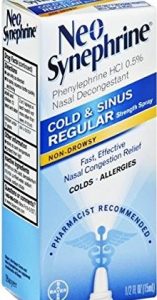
Nasal decongestants like Neo-Synephrine, Dristan and Afrin contain the medications phenylephrine and oxymetazoline. By constricting blood vessels inside the nose they widen the nasal passages. allowing more air to flow through the nose. They provide great relief when a virus or allergy keeps you from breathing with your mouth closed. The labels on these medications recommend that they should be used no longer than three days. Why? Because once the effect of the medication is gone, the nasal blood vessels swell back up and block air flow. This can happen even if your virus or allergy is resolved. The rebound symptoms can be uncomfortable for several days.
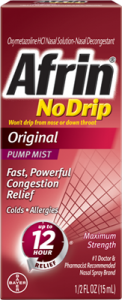
Rebound congestion makes you feel like you still have cold/allergy symptoms and still need to use the nasal spray. You might even continue to use the nasal spray indefinitely, since the congestion keeps returning.

There's a better way, though. If you've used a decongestant spray for more than a couple of days, be ready to taper it slowly. One way to taper is to start by using only half of a usual spray in one nostril while using the full dose in the other, then stop using it in that nostril altogether. Or use the usual dose with decreasing frequency in one nostril for a couple of days, then stopping. Either way, once that nostril seems back to normal, start tapering the same way in the other nostril. The idea is that by slowly tapering the dose and allowing one nostril to recover at a time, the uncomfortable symptoms of rebound congestion can be minimized.

Heartburn medications

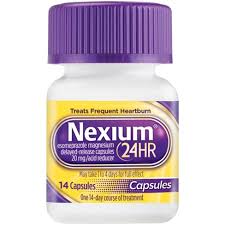
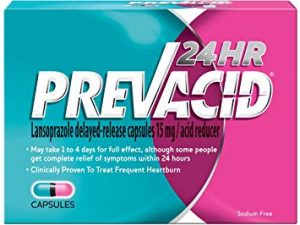
The heartburn medications known as "proton-pump inhibitors" (PPIs) include Nexium, Prevacid, and Prilosec. They work by preventing the production of stomach acid, so they're really good at relieving  heartburn symptoms. So good, in fact, that they are often used for longer than the recommended 14 days. If used regularly for more than a few weeks then stopped abruptly, the rebound acid production may result in severe hearburn symptoms. Ultimately, these meds are sometimes continued indefinitely, even lifelong.
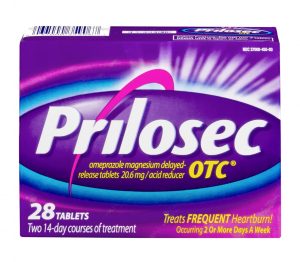
The ideal way to handle the possibility of rebound acid secretion is to prevent it. If you use a PPI only "as needed"  instead of every day you're at a very low risk of rebound. If you must use it daily, the risk is lowest if you stick to the recommended two weeks or less. But if you find yourself wondering if your chronic heartburn is a consequence of rebound acid production, try tapering it. The tablets/capsules must be swallowed whole, so the dose can't be gradually decreased. Instead, use two to four weeks to slowly extend the interval between doses. For example, if you're currently taking the PPI once daily before breakfast, start by extending the interval by an extra six hours or so, taking the next dose at lunchtime on the second day. Then extend it further and take the next dose at bedtime on the third day. Continue tapering in that way for at least two weeks before stopping. There are many ways to slowly decrease the dose, so find one that works for you. Non-prescription heartburn medications such as Zantac, Pepcid, and others can be used for occasional symptoms while you're tapering.  

Know when it's important to taper non-prescription medications.

Knowing ahead of time that your non-prescription medicine may need to be tapered will decrease your risk of rebound side effects. You can use the medication when you need it but not find yourself using it longer than necessary. For other questions about medications that should be tapered, talk with your community pharmacist or contact us at BetterMyMeds!

Share this Post

About Betty Chaffee

Betty Chaffee, PharmD, is owner and sole proprietor of BetterMyMeds, a Medication Management service devoted to helping people get the maximum benefit from their medications.

Leave a Comment

Your email address will not be published. Required fields are marked *

*
*